5 Signs Your Teen May Be Falling Behind in High School Math
The 5-Step Parent Checklist

If your teen's math marks are slipping, or quietly staying stuck, you're not alone. And it's not always obvious why.
On the surface, everything might look completely fine.
The notes are in the binder. The homework is done. And when you ask how math is going, you get the classic "I get it."
But then test day comes. And the results just don't match.
Here's what I've learned after two decades in the classroom: most math struggles don't announce themselves as failure right away. They start as small habits that quietly break down over time, usually long before a grade tells the story.
In this post, I'm going to walk you through the five signs I look for when I'm trying to figure out whether a student is truly on track. And more importantly, I'll show you how to read those signs through my three-step learning system so you can stop guessing and actually see where your teen is getting stuck.
First, a little context on how high school math actually works
In Ontario, grade nine and ten are what I call the training years. Students are expected to close the gaps from middle school, build real study habits, and develop the kind of consistency and stamina that high school math demands.
By grade eleven, they're supposed to be proving they're ready for grade twelve. And by grade twelve, the expectation is already set: they should know how to learn math effectively on their own.
So when a student hits grade eleven or twelve and suddenly feels like they're drowning, it's rarely because they can't do math. It's almost always because the habits underneath were never fully built. That's why catching these signs early makes such a big difference.
If you'd rather hear me walk you through this in person, I break down all five signs in detail in this YouTube episode. Give it a watch and follow along with the free parent checklist as you go.
Download the free printable parent checklist here: https://learn.zenmath.ca/parentcheck
The three layers I look through
Before we get into the signs, here's the simple framework I use with every student.
There are three layers where things can break down:
The content layer, which is about whether they actually understood the lesson. The homework layer, which is about whether they can practice and apply what they learned. And the performance layer, which is about whether they can show up consistently when it counts, especially on test day.
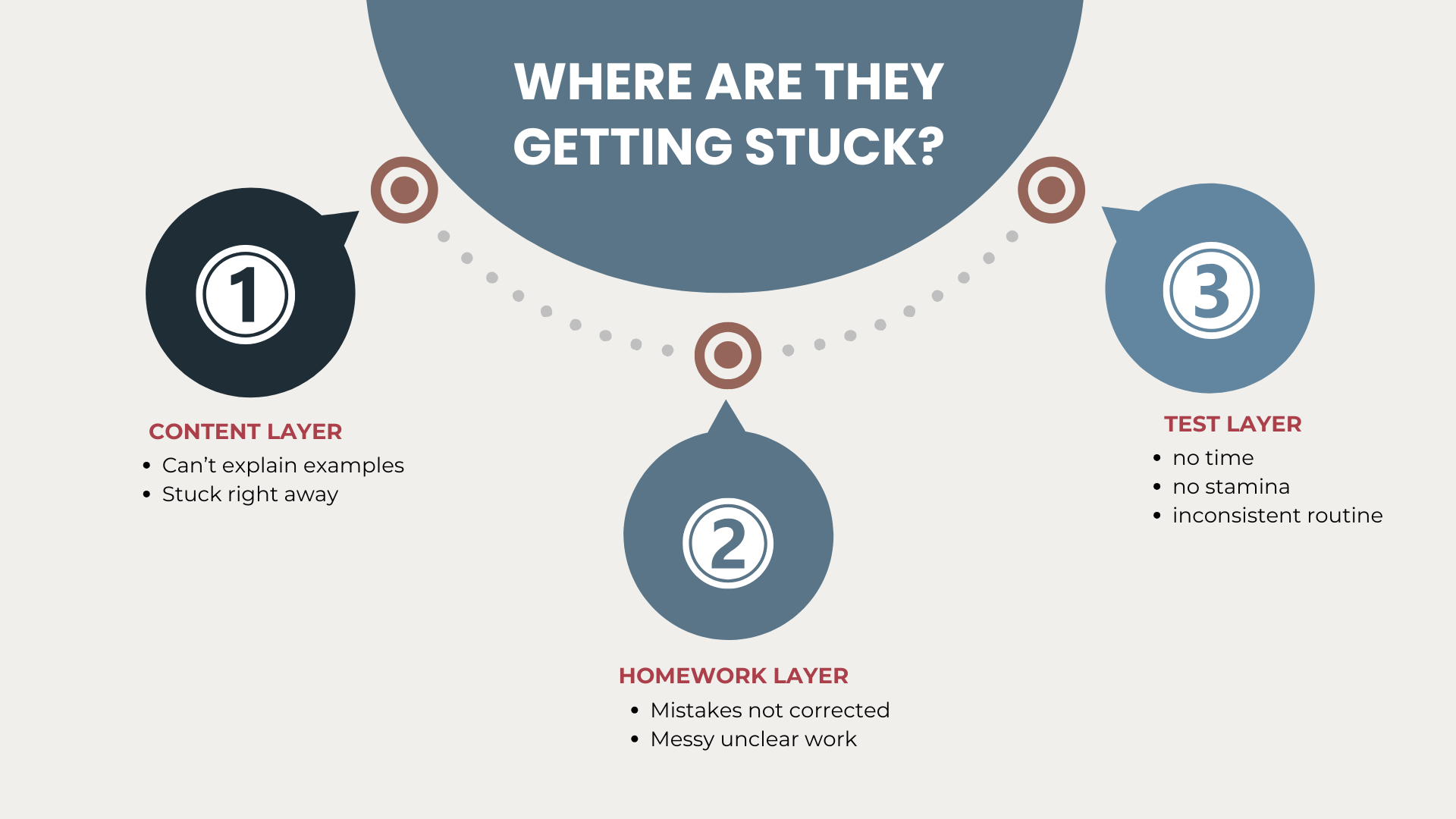
Every sign I'm about to share ties back to one of these three layers. Once you know which one is the problem, you stop spinning your wheels and start fixing the right thing.
Sign 1: They can't explain an example from their notes
This one is simple to check and very telling.
Ask your teen to open their notebook and walk you through one example from a recent lesson. You're not looking for a perfect explanation. You're just looking for some clarity and confidence.
If they struggle, it usually means the lesson was copied but never really processed. They recognized it in class, but it didn't actually land. And when that happens, everything that follows, the homework, the studying, the test, gets so much harder than it needs to be.
This one almost always points back to the content layer.
Sign 2: Homework feels hard right from the start
Homework should feel like a natural continuation of the lesson. The first few questions are supposed to feel familiar, almost like repetition. That's by design.
So if your teen is getting stuck in the very first questions, feeling overwhelmed before they've even gotten going, or avoiding starting altogether, that's a signal worth paying attention to.
It usually means the lesson didn't fully click. And the fix isn't more effort. It's going back to the content layer and making sure the foundation is actually there.
Sign 3: Mistakes aren't being corrected
This one is easy to overlook, but it matters so much.
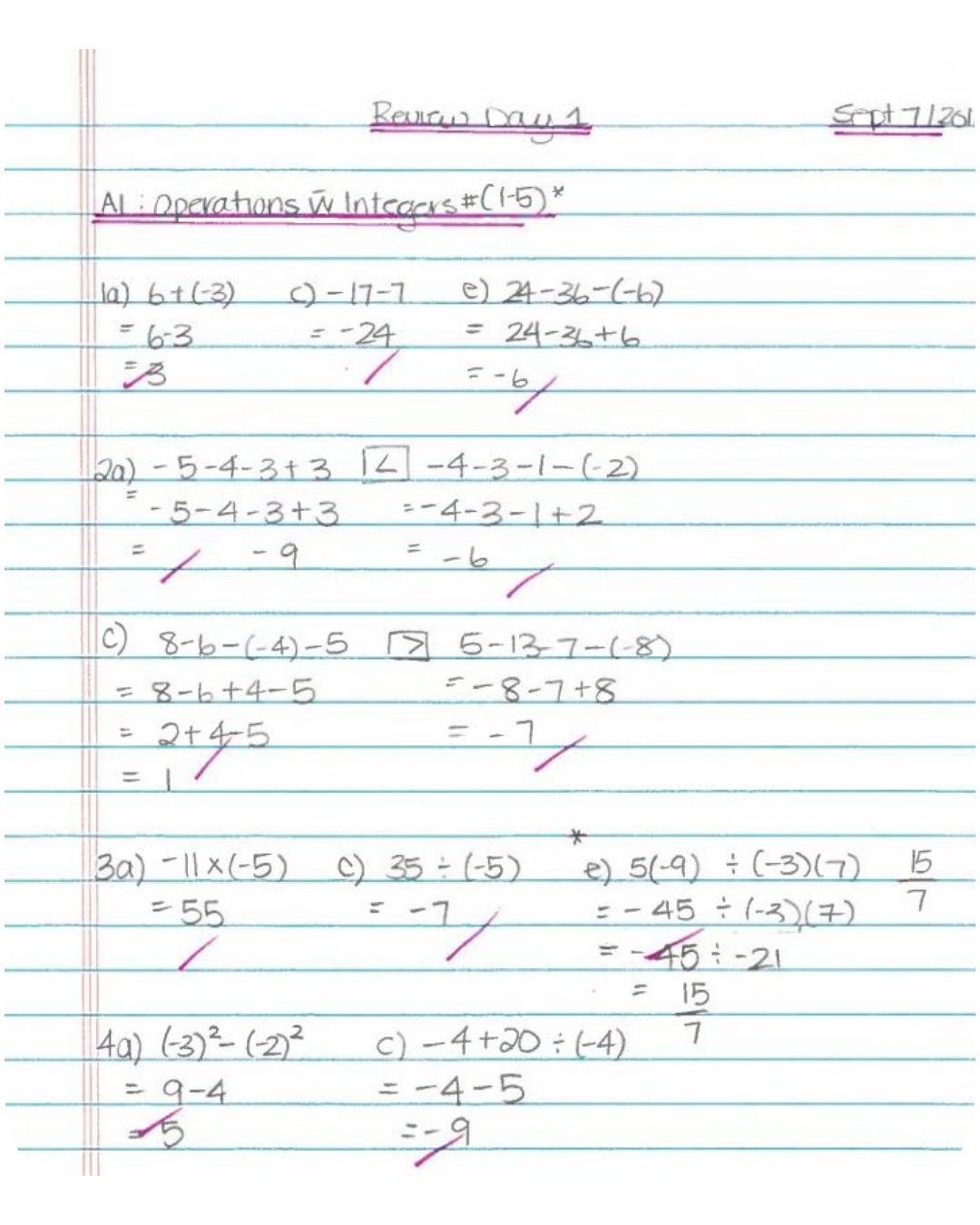
Homework isn't just something to finish. It's supposed to become a study tool. Every correction made beside a wrong answer is one less surprise on test day.
When I walk around my classroom and see questions left blank or errors that were never revisited, I know that student is working harder than they need to and getting less out of it.
What strong homework habits actually look like: corrections written beside mistakes, questions reattempted, and small notes added so future studying actually makes sense.
This sits in the homework layer, and it's one of the most fixable things on this list.
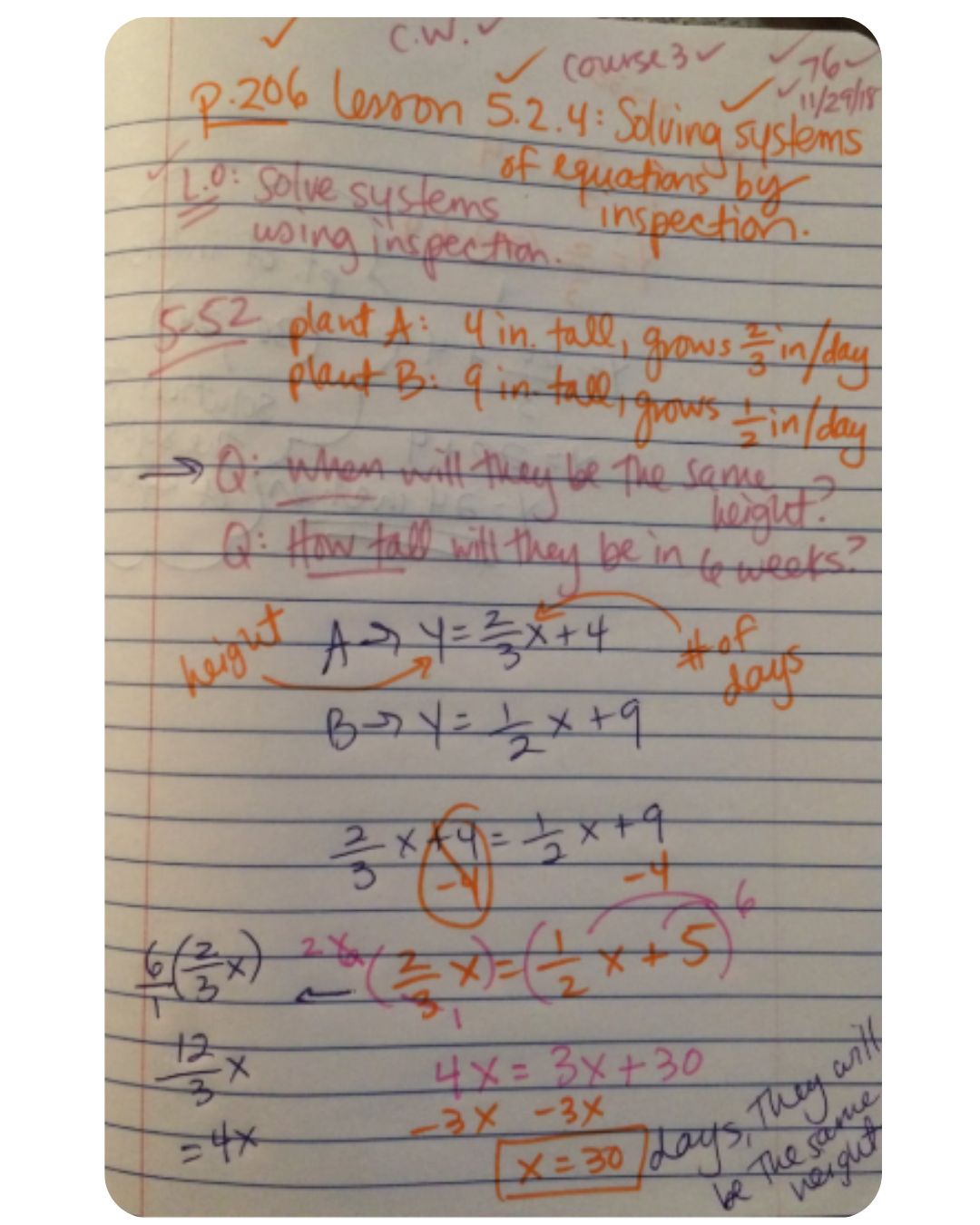
Sign 4: Their work has no clear process
I always tell my students: practice the way you want to perform. Because whatever shows up in their homework is usually what shows up on the test.
Messy, unstructured work isn't just hard to read. It reflects unclear thinking. And in math, unclear thinking costs marks, even when the final answer is right.
What to look for: can you actually follow the steps on the page? Can you see their reasoning, even if you don't fully understand the math yourself? If the answer is no, that's something worth addressing sooner rather than later.
Sign 5: They don't have the time or the stamina for math
Math doesn't work well in ten-minute bursts between everything else. It takes time to settle in, make mistakes, fix them, and actually build understanding.
I know our family lives are busy. I really do. But if your teen is rushing through homework, mentally checked out before they've even started, or just can't seem to sit with math consistently, that's going to show up in their performance.
Stamina in math is built over time, just like it is in sport. And this is exactly why grade nine and ten matter so much. Those years are the training ground.
So where is your teen actually getting stuck?
Here's the simple breakdown.
If they can't explain concepts and get stuck right away, that's a content issue. If homework is messy or mistakes are never corrected, that's a practice issue. If there's no consistency, stamina, or real effort at test time, that's a performance issue.
That's how you stop guessing and start seeing what's actually going on.

And please, don't panic.
If you recognized one or more of these signs, it doesn't mean your teen is bad at math. It took me five years of high school math to figure out how to really learn it, and I ended up becoming a math major.
What these signs usually mean is that specific habits are missing. Not ability. And habits are absolutely teachable.
The earlier you catch it, the easier it is to fix, and the less likely it is to follow them into grade twelve when the pressure is real.
To make this easier, I put together a free parent checklist that walks you through exactly what to look for and how to interpret what you're seeing. It's designed to help you figure out which layer your teen is stuck in, start the right conversations at home, and take clear, practical next steps from there.